Complete wastewater services

Effluent treatment plants

Develop an ETP around the wastewater your facility actually produces. Aquenvia offers complete industrial treatment projects, from characterization and process selection to installation and operating support.

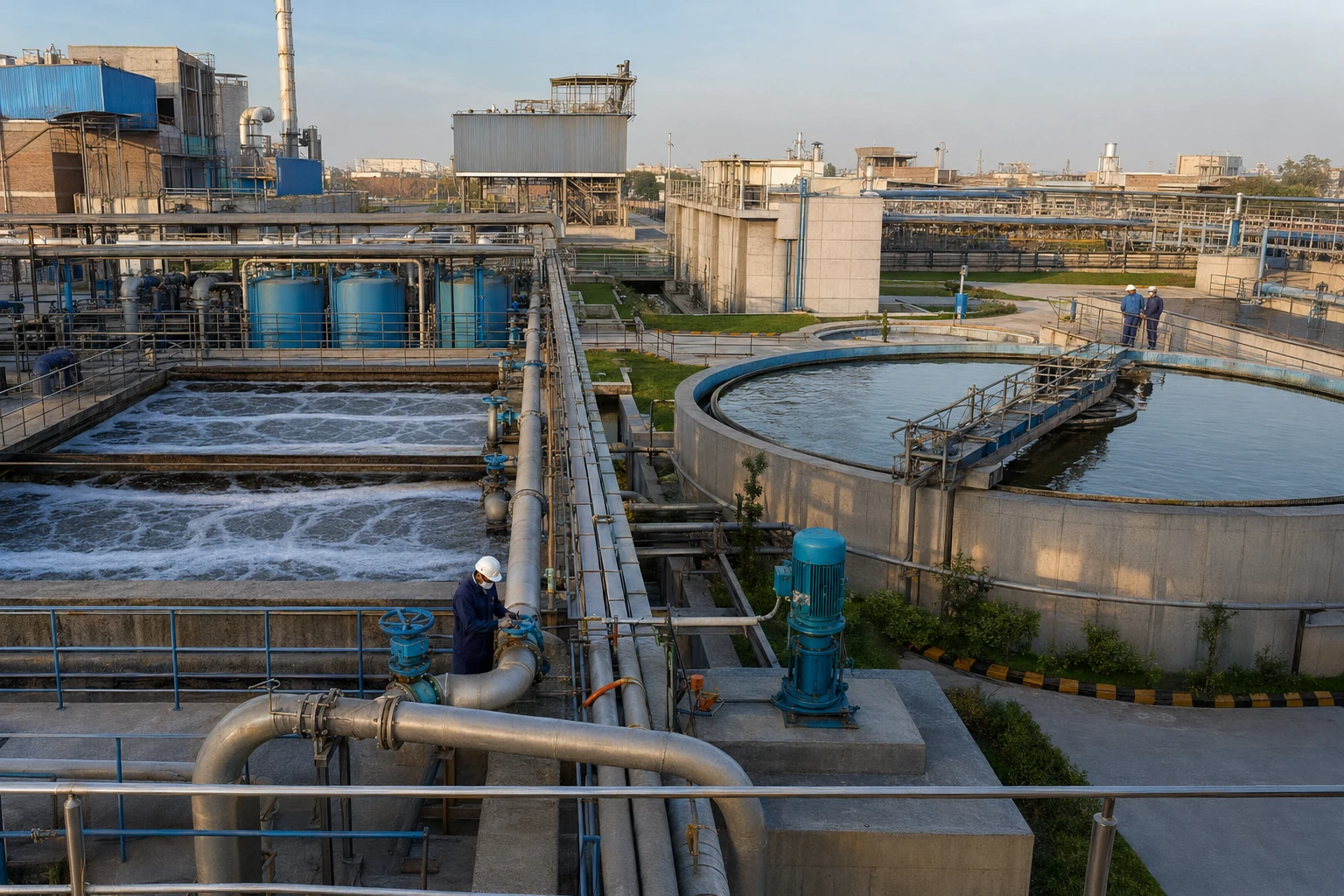
Illustrative industrial effluent treatment facility with tanks and piping
Industrial treatment · Illustrative concept
01

Understand the effluent

Production cycles, cleaning operations, and separate waste streams can change the load reaching an ETP. We begin with flow data, sampling requirements, existing arrangements, and the intended discharge or reuse target.

  • Waste stream and production review
  • Sampling and laboratory coordination
  • Average, peak, and batch flows
  • Existing ETP condition assessment
02

Define the treatment train

Select pretreatment, biological treatment, and polishing according to the analysis. Modular equipment can form part of the system where appropriate; each industrial application needs its own design basis.

  • Screening, separation, and equalization
  • Physicochemical treatment where required
  • Biological treatment where suitable
  • Tertiary treatment and sludge management
03

Deliver a complete project

The proposal brings process equipment, tanks, installation, power, controls, and commissioning together with clear scope boundaries and operating requirements.

  • Engineering and equipment selection
  • Civil, mechanical, and electrical works
  • Commissioning and operator training
  • Consumables, maintenance, and support planning
04

Prepare a DAF treatment basis

For oily, food, dairy or fine-solids wastewater, use the DAF selection and quotation guide to organize representative samples, peak flow, chemical testing, recycle equipment, sludge handling and performance acceptance before comparing proposals.

05

Screen food solids and fibres before treatment

Use the rotary drum screen selection guide to define representative solids, feed distribution, active area, opening geometry, grease and fibre limitations, wash-water return, reject handling and acceptance before comparing industrial pretreatment packages.

06

Characterize textile wastewater before selecting an ETP

Use the Pakistan textile wastewater guide to separate colour, organic loading, suspended solids and dissolved salts, calculate hypothetical daily loads and prepare common quotation inputs.

07

Compare compact lamella clarification

Use the lamella clarifier selection guide to define settling tests, peak hydraulic and solids loading, projected plate area, chemical conditioning, sludge withdrawal, cleaning and acceptance before comparing packaged units or retrofit plate packs.

REG

Start with the correct provincial discharge context

Use the Punjab wastewater standards guide or the Sindh wastewater standards guide for the facility's actual location and receiving route. These guides explain how to identify the applicable table, units, footnotes, monitoring context and missing design information. A discharge limit is a project input, not a complete treatment process or blanket compliance guarantee.

SWS

Assess a static screen on representative wastewater

Use the static wedge-wire screen selection and operating guide to check effective area, peak loading, feed distribution, slots, blinding, cleaning, screenings handling, safe access and measured acceptance before selecting or replacing a passive screen.

HCF

Planning treatment for a hospital?

Use the hospital wastewater treatment service to map sewage and specialist liquid streams, establish flow and load, compare STP, ETP and source-pretreatment arrangements, and define disinfection, sludge, operating and quotation requirements.

Discuss your project or request a site survey.

Discuss your project
WhatsApp